
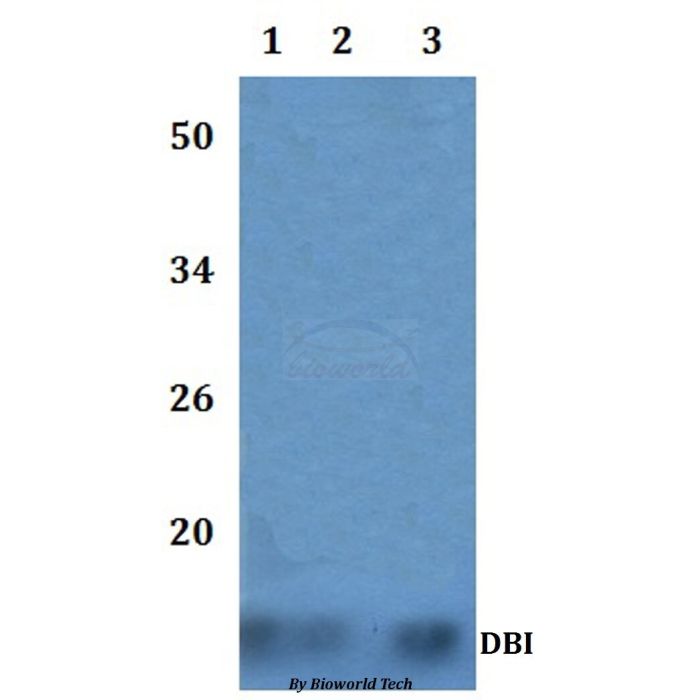
DBI polyclonal, anti-human, mouse, rat
€305.00
In stock
SKU
BS60861
Background:
Long chain acyl-CoA esters (LCAs) act as both substrates and intermediates in metabolism, and as regulators of various intracellular functions. Acyl-CoA binding protein (ACBP) specifically binds to LCA with high affinity and regulates its availability. ACBP is structurally and functionally conserved among a diverse group of organisms, including human, rat, frog, insect, plant and yeast. DBI, the gene encoding human ACBP, which maps to chromosome 2, is highly expressed in liver, soleus muscle and heart. The ACBP protein is also abundant in cells with a high level of lipogenesis and de novo fatty acid synthesis. Expression of ACBP is significantly induced during adipocyte differentiation. DBI is a target gene for proliferator-activated receptor (PPAR) γ, and is directly activated by PPARγ/RXR&aipha; and PPAR&aipha;/RXR&aipha;, but not by PPARδ/ RXR&aipha;. In addition to acyl-CoA binding and transport, ACBP is also implicated in g-aminobutyric acid type A receptor binding, steroidogenesis and peptide hormone release.
Alternative Name:
Acyl-CoA-binding protein, ACBP, Diazepam-binding inhibitor, DBI, Endozepine, EP, DBI
Application Dilution: WB: 1:500~1:1000
Specificity: DBI polyclonal antibody detects endogenous levels of DBI protein.
Immunogen:
A synthetic peptide corresponding to residues in Human DBI.
MW: ~ 10 kD
Swis Prot.: P07108
Purification & Purity:
The antibody was affinity-purified from rabbit antiserum by affinity-chromatography using epitope-specific immunogen and the purity is > 95% (by SDS-PAGE).
Format:
1 mg/ml in Phosphate buffered saline (PBS) with 0.05% sodium azide, approx. pH 7.3.
Storage:
Store at 4°C short term. Aliquot and store at -20°C long term. Avoid freeze-thaw cycles.
For research use only, not for use in diagnostic procedure.
Long chain acyl-CoA esters (LCAs) act as both substrates and intermediates in metabolism, and as regulators of various intracellular functions. Acyl-CoA binding protein (ACBP) specifically binds to LCA with high affinity and regulates its availability. ACBP is structurally and functionally conserved among a diverse group of organisms, including human, rat, frog, insect, plant and yeast. DBI, the gene encoding human ACBP, which maps to chromosome 2, is highly expressed in liver, soleus muscle and heart. The ACBP protein is also abundant in cells with a high level of lipogenesis and de novo fatty acid synthesis. Expression of ACBP is significantly induced during adipocyte differentiation. DBI is a target gene for proliferator-activated receptor (PPAR) γ, and is directly activated by PPARγ/RXR&aipha; and PPAR&aipha;/RXR&aipha;, but not by PPARδ/ RXR&aipha;. In addition to acyl-CoA binding and transport, ACBP is also implicated in g-aminobutyric acid type A receptor binding, steroidogenesis and peptide hormone release.
Alternative Name:
Acyl-CoA-binding protein, ACBP, Diazepam-binding inhibitor, DBI, Endozepine, EP, DBI
Application Dilution: WB: 1:500~1:1000
Specificity: DBI polyclonal antibody detects endogenous levels of DBI protein.
Immunogen:
A synthetic peptide corresponding to residues in Human DBI.
MW: ~ 10 kD
Swis Prot.: P07108
Purification & Purity:
The antibody was affinity-purified from rabbit antiserum by affinity-chromatography using epitope-specific immunogen and the purity is > 95% (by SDS-PAGE).
Format:
1 mg/ml in Phosphate buffered saline (PBS) with 0.05% sodium azide, approx. pH 7.3.
Storage:
Store at 4°C short term. Aliquot and store at -20°C long term. Avoid freeze-thaw cycles.
For research use only, not for use in diagnostic procedure.
| Is Featured? | No |
|---|
Write Your Own Review