
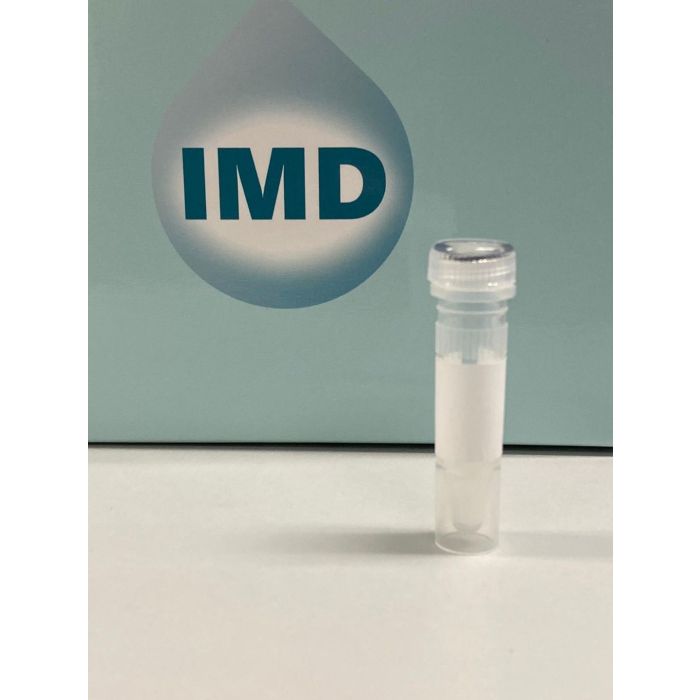
Fatty-acid binding protein 5 (FABP-5) polyclonal, anti-mouse
€265.00
In stock
SKU
IMD-12040
Polyclonal Antibody against Mouse FABP5
Application: WB, IP
Host: Rabbit
INTRODUCTION
The fatty-acid-binding proteins (FABPs) are a family of carrier proteins for fatty acids and other lipophilic substances such as eicosanoids and retinoids. These proteins are thought to facilitate the transfer of fatty acids between extra- and intracellular membranes. The fatty acid binding protein 4 (FABP4) and fatty acid binding protein 5 (FABP5) are closely related, and both are expressed in adipocytes. Mice with targeted disruption of FABP4 accompany FABP5 almost completely to protect against diet-induced obesity, insulin resistance, dyslipidemia, type 2 diabetes, and fatty liver disease. While mice over expressing FABP5 in adipose have reduced insulin sensitivity.
IMMUNOGEN: Recombinant full-length mouse FABP5 expressed in E.coli.
SPECIFICITY: The antibody detects mouse FABP5.
FORMULATION: Liquid in phosphate-buffered saline (PBS).
STORAGE:
Store at –20°C for less than one week. For long-term STORAGE: , aliquot and freeze at -70°C. Avoid repeated freeze/defrost cycles.
APPLICATION/ USAGE
Western blot - This antibody can be used at 0.5-2 μg/mL with the appropriate secondary reagents to detect mouse FABP5.
PURIFICATION: Rabbit crude IgG was purified by protein-G column.
REFERENCES
[1] Xu A, et al. (2006) Adipocyte Fatty Acid–Binding Protein Is a Plasma Biomarker Closely Associated with Obesity and Metabolic Syndrome. Clin Chem. 52(3):405-13.
[2] Xu A, et al. (2007) Circulating adipocyte–fatty acid binding protein levels predict the development of the metabolic syndrome: a 5-year prospective study. Circulation. 115:1537–1543.
[3] Rhee EJ, et al. (2009) The association of serum adipocyte fatty acid-binding protein with coronary artery disease in Korean adults. Eur J Endocrinol. 160(2):165-72.
Application: WB, IP
Host: Rabbit
INTRODUCTION
The fatty-acid-binding proteins (FABPs) are a family of carrier proteins for fatty acids and other lipophilic substances such as eicosanoids and retinoids. These proteins are thought to facilitate the transfer of fatty acids between extra- and intracellular membranes. The fatty acid binding protein 4 (FABP4) and fatty acid binding protein 5 (FABP5) are closely related, and both are expressed in adipocytes. Mice with targeted disruption of FABP4 accompany FABP5 almost completely to protect against diet-induced obesity, insulin resistance, dyslipidemia, type 2 diabetes, and fatty liver disease. While mice over expressing FABP5 in adipose have reduced insulin sensitivity.
IMMUNOGEN: Recombinant full-length mouse FABP5 expressed in E.coli.
SPECIFICITY: The antibody detects mouse FABP5.
FORMULATION: Liquid in phosphate-buffered saline (PBS).
STORAGE:
Store at –20°C for less than one week. For long-term STORAGE: , aliquot and freeze at -70°C. Avoid repeated freeze/defrost cycles.
APPLICATION/ USAGE
Western blot - This antibody can be used at 0.5-2 μg/mL with the appropriate secondary reagents to detect mouse FABP5.
PURIFICATION: Rabbit crude IgG was purified by protein-G column.
REFERENCES
[1] Xu A, et al. (2006) Adipocyte Fatty Acid–Binding Protein Is a Plasma Biomarker Closely Associated with Obesity and Metabolic Syndrome. Clin Chem. 52(3):405-13.
[2] Xu A, et al. (2007) Circulating adipocyte–fatty acid binding protein levels predict the development of the metabolic syndrome: a 5-year prospective study. Circulation. 115:1537–1543.
[3] Rhee EJ, et al. (2009) The association of serum adipocyte fatty acid-binding protein with coronary artery disease in Korean adults. Eur J Endocrinol. 160(2):165-72.
| Is Featured? | No |
|---|
Write Your Own Review