
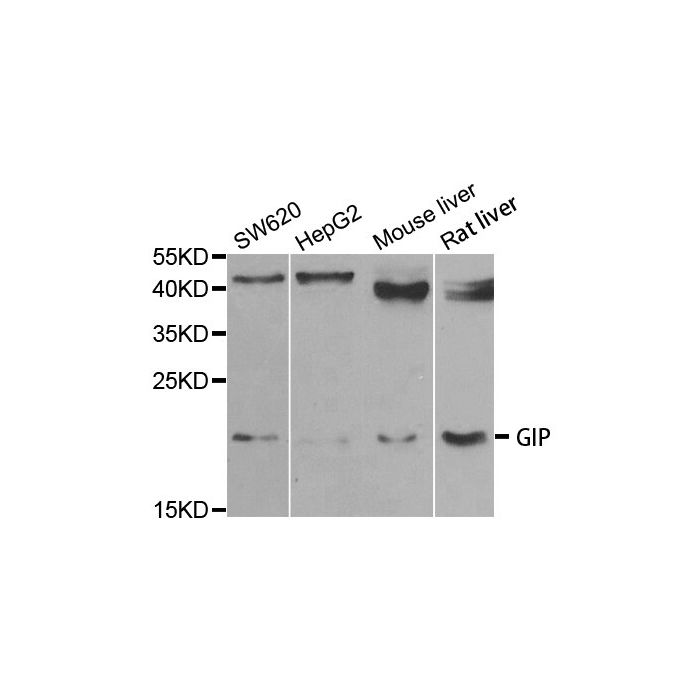
GIP polyclonal, anti-human, mouse, rat
€388.00
In stock
SKU
BS7977
Background:
Glucose-dependent insulinotropic polypeptide (GIP) is a major physiologic factor in the augmentation of the insulin response to oral glucose. GIP is a peptide hormone that is released postprandially from the small intestine and acts in concert with glucagon-like peptide (GLP)-1 to potentiate glucose-induced insulin secretion from the pancreatic β-cell. GIP has been shown to increase adenylyl cyclase activity, elevate intracellular calcium levels, and stimulate a mitogen-activated protein kinase pathway in the pancreatic β-cell. Additionally, nutrient protein provides a potent stimulus for GIP expression, an effect that occurs at the posttranslational level and may be mediated in part through the acid-stimulatory properties of protein. GIP release is demonstrated predominantly after ingestion of carbohydrate and fat and the effects of acid on GIP are consistent with a role for GIP as an enterogastrone.
Alternative Name:
Gastric Inhibitory Peptide, Gastric inhibitory polypeptide, Gastric inhibitory polypeptide precursor, GIP, GIP_HUMAN, Glucose dependent insulinotropic polypeptide, Glucose-dependent insulinotropic polypeptide, Incretin hormone,
Application Dilution: WB: 1:500~1:2000, IHC: 1:50~1:200, IF: 1:50~1:200
Specificity: GIP polyclonal antibody detects endogenous levels of GIP protein.
Immunogen:
Recombinant full length Human GIP.
MW: ~ 17 kDa
Swis Prot.: P09681
Purification & Purity:
The antibody was affinity-purified from rabbit antiserum by affinity-chromatography using epitope-specific immunogen and the purity is > 95% (by SDS-PAGE).
Format:
1mg/ml in PBS with 0.1% Sodium Azide, 50% Glycerol.
Storage:
Store at 4°C short term. Aliquot and store at -20°C long term. Avoid freeze-thaw cycles.
For research use only, not for use in diagnostic procedure.
Glucose-dependent insulinotropic polypeptide (GIP) is a major physiologic factor in the augmentation of the insulin response to oral glucose. GIP is a peptide hormone that is released postprandially from the small intestine and acts in concert with glucagon-like peptide (GLP)-1 to potentiate glucose-induced insulin secretion from the pancreatic β-cell. GIP has been shown to increase adenylyl cyclase activity, elevate intracellular calcium levels, and stimulate a mitogen-activated protein kinase pathway in the pancreatic β-cell. Additionally, nutrient protein provides a potent stimulus for GIP expression, an effect that occurs at the posttranslational level and may be mediated in part through the acid-stimulatory properties of protein. GIP release is demonstrated predominantly after ingestion of carbohydrate and fat and the effects of acid on GIP are consistent with a role for GIP as an enterogastrone.
Alternative Name:
Gastric Inhibitory Peptide, Gastric inhibitory polypeptide, Gastric inhibitory polypeptide precursor, GIP, GIP_HUMAN, Glucose dependent insulinotropic polypeptide, Glucose-dependent insulinotropic polypeptide, Incretin hormone,
Application Dilution: WB: 1:500~1:2000, IHC: 1:50~1:200, IF: 1:50~1:200
Specificity: GIP polyclonal antibody detects endogenous levels of GIP protein.
Immunogen:
Recombinant full length Human GIP.
MW: ~ 17 kDa
Swis Prot.: P09681
Purification & Purity:
The antibody was affinity-purified from rabbit antiserum by affinity-chromatography using epitope-specific immunogen and the purity is > 95% (by SDS-PAGE).
Format:
1mg/ml in PBS with 0.1% Sodium Azide, 50% Glycerol.
Storage:
Store at 4°C short term. Aliquot and store at -20°C long term. Avoid freeze-thaw cycles.
For research use only, not for use in diagnostic procedure.
| Is Featured? | No |
|---|
Write Your Own Review