
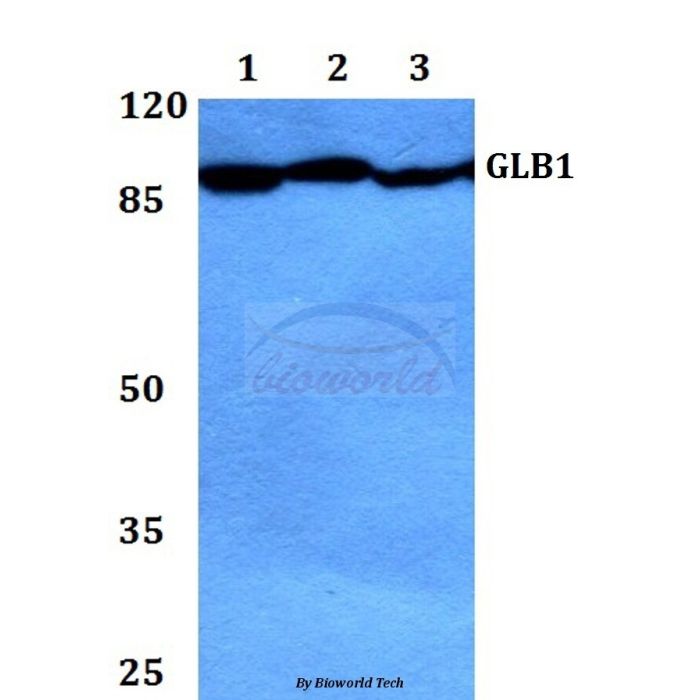
GLB1 polyclonal, anti-human, rat
€305.00
In stock
SKU
BS60421
Background:
The human b-galactosidase gene, known as the LacZ gene, maps to chromosome 3p21.33 and encodes a 677 amino acid protein with an optimum functional pH range of 6 to 8. Catalytically active b-galactosidases (b-Gal) is a tetramer of four identical subunits, each with an active site, which can independently catalyze the cleavage of terminal galactose. Monovalent cations have a stimulatory effect on the enzymatic reaction, which likely involves a galactosyl-enzyme complex intermediate. b-Gals are widespread in animals, microorganisms and plants. The LacZ gene is widely used as a reporter gene with a variety of colored or fluorescent compounds capable of being produced from appropriate substrates, such as Xgal, which produces a blue color. For this reason, LacZ is incorporated into numerous plasmid vectors as a marker.
Alternative Name:
Beta-galactosidase, Acid beta-galactosidase, Lactase, Elastin receptor 1, GLB1, ELNR1
Application Dilution: WB: 1:500~1:1000
Specificity: GLB1 polyclonal antibody detects endogenous levels of GLB1 protein.
Immunogen:
A synthetic peptide corresponding to residues in Human GLB1.
MW: ~ 90 kDa
Swis Prot.: P16278
Purification & Purity:
The antibody was affinity-purified from rabbit antiserum by affinity-chromatography using epitope-specific immunogen and the purity is > 95% (by SDS-PAGE).
Format:
1 mg/ml in Phosphate buffered saline (PBS) with 0.05% sodium azide, approx. pH 7.2.
Storage:
Store at 4°C short term. Aliquot and store at -20°C long term. Avoid freeze-thaw cycles.
For research use only, not for use in diagnostic procedure.
The human b-galactosidase gene, known as the LacZ gene, maps to chromosome 3p21.33 and encodes a 677 amino acid protein with an optimum functional pH range of 6 to 8. Catalytically active b-galactosidases (b-Gal) is a tetramer of four identical subunits, each with an active site, which can independently catalyze the cleavage of terminal galactose. Monovalent cations have a stimulatory effect on the enzymatic reaction, which likely involves a galactosyl-enzyme complex intermediate. b-Gals are widespread in animals, microorganisms and plants. The LacZ gene is widely used as a reporter gene with a variety of colored or fluorescent compounds capable of being produced from appropriate substrates, such as Xgal, which produces a blue color. For this reason, LacZ is incorporated into numerous plasmid vectors as a marker.
Alternative Name:
Beta-galactosidase, Acid beta-galactosidase, Lactase, Elastin receptor 1, GLB1, ELNR1
Application Dilution: WB: 1:500~1:1000
Specificity: GLB1 polyclonal antibody detects endogenous levels of GLB1 protein.
Immunogen:
A synthetic peptide corresponding to residues in Human GLB1.
MW: ~ 90 kDa
Swis Prot.: P16278
Purification & Purity:
The antibody was affinity-purified from rabbit antiserum by affinity-chromatography using epitope-specific immunogen and the purity is > 95% (by SDS-PAGE).
Format:
1 mg/ml in Phosphate buffered saline (PBS) with 0.05% sodium azide, approx. pH 7.2.
Storage:
Store at 4°C short term. Aliquot and store at -20°C long term. Avoid freeze-thaw cycles.
For research use only, not for use in diagnostic procedure.
| Is Featured? | No |
|---|
Write Your Own Review