
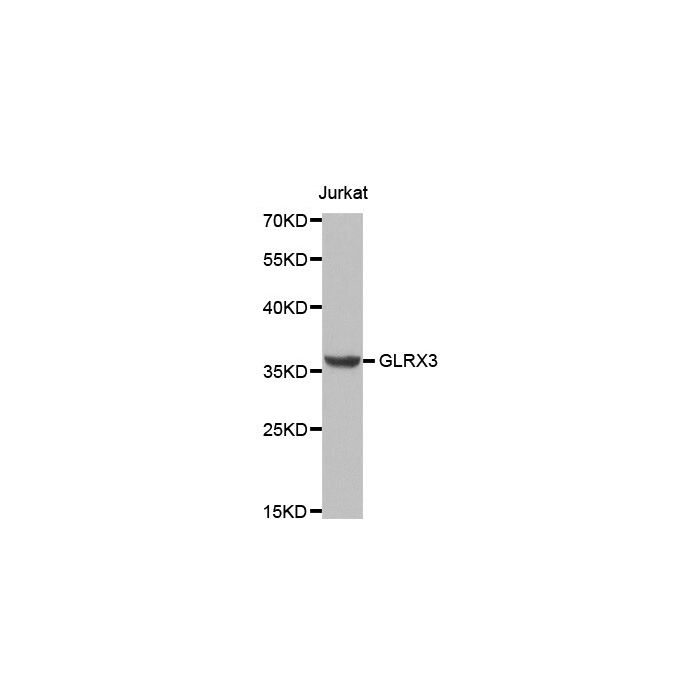
GLRX3 polyclonal, anti-human
€388.00
In stock
SKU
BS8084
Background:
PICOT, also known as GLRX3 (glutaredoxin 3), GRX3, GRX4, GLRX4, HUSSY-22, TXNL2 or TXNL3, is a 335 amino acid protein that contains one thioredoxin domain and two glutaredoxin domains. Localized to the cytoplasm and the cell cortex, PICOT is thought to play a role in regulating the thioredoxin system and may weakly interact with PKC θ (protein kinase C theta). Through its ability to regulate the thioredoxin pathway, PICOT inhibits cardiac hypertrophy (a thickening of the heart muscle usually caused by high blood pressure) by negatively regulating NFAT (Nuclear factor of activated T-cells) signaling. Although PICOT contains one thioredoxin domain, it lacks the two redox-reactive cysteines that are required for catalytic activity, suggesting that PICOT lacks thioredoxin function. PICOT is expressed in testis, heart and spleen with lower levels detected in thymus, lung, colon, placenta and small intestine.
Alternative Name:
Glutaredoxin-3, PKC-interacting cousin of thioredoxin, PICOT, PKC-theta-interacting protein, PKCq-interacting protein, Thioredoxin-like protein 2, GLRX3, PICOT, TXNL2, HUSSY-22
Application Dilution: WB: 1:500 - 1:2000, IP: 1:50 - 1:100
Specificity: GLRX3 polyclonal antibody detects endogenous levels of GLRX3 protein.
Immunogen:
Recombinant full length Human GLRX3.
MW: ~ 37 kDa
Swis Prot.: O76003
Purification & Purity:
The antibody was affinity-purified from rabbit antiserum by affinity-chromatography using epitope-specific immunogen and the purity is > 95% (by SDS-PAGE).
Format:
1mg/ml in PBS with 0.1% Sodium Azide, 50% Glycerol.
Storage:
Store at 4°C short term. Aliquot and store at -20°C long term. Avoid freeze-thaw cycles.
For research use only, not for use in diagnostic procedure.
PICOT, also known as GLRX3 (glutaredoxin 3), GRX3, GRX4, GLRX4, HUSSY-22, TXNL2 or TXNL3, is a 335 amino acid protein that contains one thioredoxin domain and two glutaredoxin domains. Localized to the cytoplasm and the cell cortex, PICOT is thought to play a role in regulating the thioredoxin system and may weakly interact with PKC θ (protein kinase C theta). Through its ability to regulate the thioredoxin pathway, PICOT inhibits cardiac hypertrophy (a thickening of the heart muscle usually caused by high blood pressure) by negatively regulating NFAT (Nuclear factor of activated T-cells) signaling. Although PICOT contains one thioredoxin domain, it lacks the two redox-reactive cysteines that are required for catalytic activity, suggesting that PICOT lacks thioredoxin function. PICOT is expressed in testis, heart and spleen with lower levels detected in thymus, lung, colon, placenta and small intestine.
Alternative Name:
Glutaredoxin-3, PKC-interacting cousin of thioredoxin, PICOT, PKC-theta-interacting protein, PKCq-interacting protein, Thioredoxin-like protein 2, GLRX3, PICOT, TXNL2, HUSSY-22
Application Dilution: WB: 1:500 - 1:2000, IP: 1:50 - 1:100
Specificity: GLRX3 polyclonal antibody detects endogenous levels of GLRX3 protein.
Immunogen:
Recombinant full length Human GLRX3.
MW: ~ 37 kDa
Swis Prot.: O76003
Purification & Purity:
The antibody was affinity-purified from rabbit antiserum by affinity-chromatography using epitope-specific immunogen and the purity is > 95% (by SDS-PAGE).
Format:
1mg/ml in PBS with 0.1% Sodium Azide, 50% Glycerol.
Storage:
Store at 4°C short term. Aliquot and store at -20°C long term. Avoid freeze-thaw cycles.
For research use only, not for use in diagnostic procedure.
| Is Featured? | No |
|---|
Write Your Own Review