
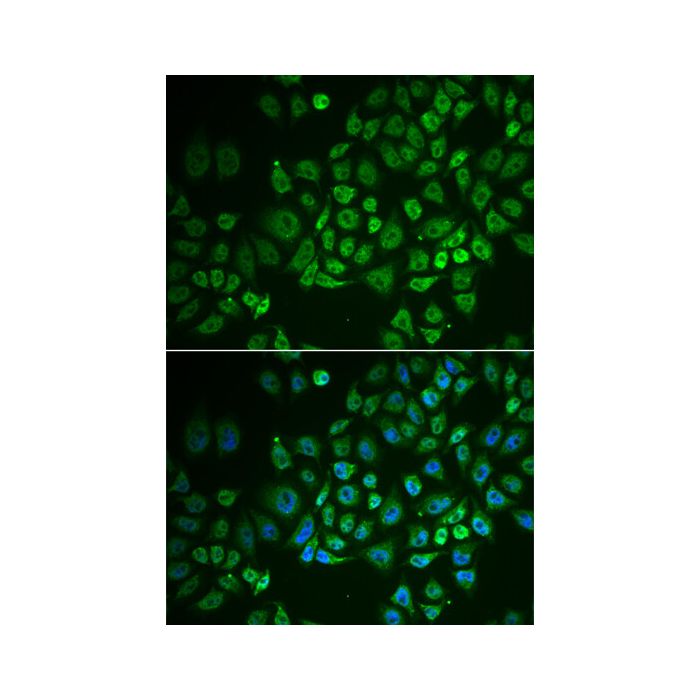
GPI-PLD polyclonal, anti-human, mouse, rat
€388.00
In stock
SKU
BS8533
Background:
Phosphatidylinositol-glycan-specific phospholipase D (GPI-PLD) is a high-density lipoprotein-associated protein found on chromosome 6p22 that specifically hydrolyzes the inositol phosphate linkage in proteins anchored by phosphatidylinositol-glycans (PI-Gs). GPI-PLD is found in serum, liver, cerebrospinal fluid and in milk. The majority of plasma GPI-PLD appears to be specifically associated with a small, discrete and minor fraction of lipoproteins containing apoA-I and apoA-IV. Serum GPI-PLD activity is reduced over 75% in systemic inflammatory response syndrome and the downregulation of GPI-PLD could play an important role in the control of proinflammatory responses.
Alternative Name:
Phosphatidylinositol-glycan-specific phospholipase D, PI-G PLD, Glycoprotein phospholipase D, Glycosyl-phosphatidylinositol-specific phospholipase D, GPI-PLD, GPI-specific phospholipase D, GPLD1, PIGPLD1
Application Dilution: WB: 1:500~1:2000, IHC: 1:50~1:200, IF: 1:50~1:200
Specificity: GPI-PLD polyclonal antibody detects endogenous levels of GPI-PLD protein.
Immunogen:
Recombinant full length Human GPI-PLD.
MW: ~ 92kDa
Swis Prot.: P80108
Purification & Purity:
The antibody was affinity-purified from rabbit antiserum by affinity-chromatography using epitope-specific immunogen and the purity is > 95% (by SDS-PAGE).
Format:
1mg/ml in PBS with 0.1% Sodium Azide, 50% Glycerol.
Storage:
Store at 4°C short term. Aliquot and store at -20°C long term. Avoid freeze-thaw cycles.
For research use only, not for use in diagnostic procedure.
Phosphatidylinositol-glycan-specific phospholipase D (GPI-PLD) is a high-density lipoprotein-associated protein found on chromosome 6p22 that specifically hydrolyzes the inositol phosphate linkage in proteins anchored by phosphatidylinositol-glycans (PI-Gs). GPI-PLD is found in serum, liver, cerebrospinal fluid and in milk. The majority of plasma GPI-PLD appears to be specifically associated with a small, discrete and minor fraction of lipoproteins containing apoA-I and apoA-IV. Serum GPI-PLD activity is reduced over 75% in systemic inflammatory response syndrome and the downregulation of GPI-PLD could play an important role in the control of proinflammatory responses.
Alternative Name:
Phosphatidylinositol-glycan-specific phospholipase D, PI-G PLD, Glycoprotein phospholipase D, Glycosyl-phosphatidylinositol-specific phospholipase D, GPI-PLD, GPI-specific phospholipase D, GPLD1, PIGPLD1
Application Dilution: WB: 1:500~1:2000, IHC: 1:50~1:200, IF: 1:50~1:200
Specificity: GPI-PLD polyclonal antibody detects endogenous levels of GPI-PLD protein.
Immunogen:
Recombinant full length Human GPI-PLD.
MW: ~ 92kDa
Swis Prot.: P80108
Purification & Purity:
The antibody was affinity-purified from rabbit antiserum by affinity-chromatography using epitope-specific immunogen and the purity is > 95% (by SDS-PAGE).
Format:
1mg/ml in PBS with 0.1% Sodium Azide, 50% Glycerol.
Storage:
Store at 4°C short term. Aliquot and store at -20°C long term. Avoid freeze-thaw cycles.
For research use only, not for use in diagnostic procedure.
| Is Featured? | No |
|---|
Write Your Own Review