
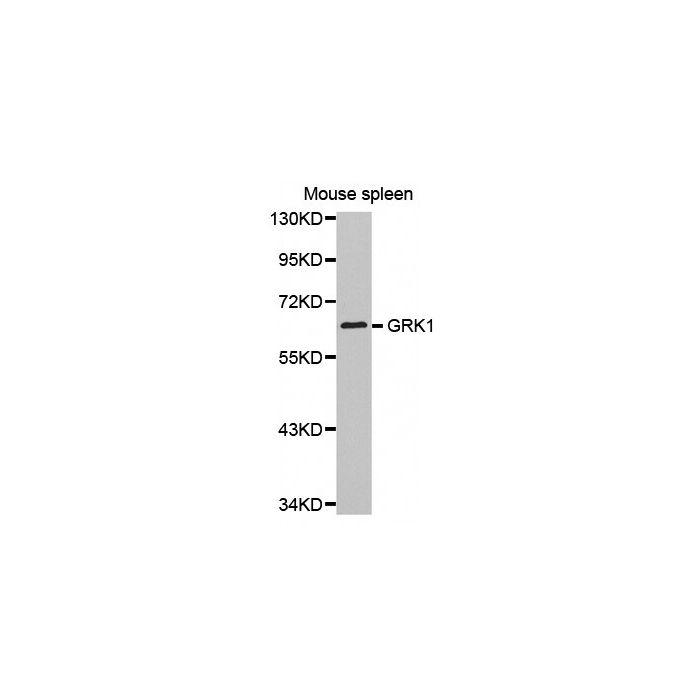
GRK1 polyclonal, anti-human, mouse, rat
€388.00
In stock
SKU
BS7127
Background:
Heterotrimeric G protein-mediated signal transduction is a dynamically regulated process with the intensity of signal decreasing over time despite the continued presence of the agonist. This phenomenon, referred to as agonistmediated desensitization, involves phosphorylation of the receptor by two classes of enzymes. The first class is comprised of the second messengerregulated kinases, such as c-AMP dependent protein kinase A and protein kinase C. The second class includes the G protein-coupled receptor kinases (GRKs). At least seven members of the GRK family have been identified. These include rhodopsin kinase (GRK 1α and β); two forms of β-adrenergic receptor kinase: GRK 2 (βARK, βARK1) and GRK 3 (βARK2); IT-11 (GRK 4); GRK 5; GRK 6; and GRK 7. Phosphorylation of receptors by GRKs appears to be strictly dependent on the receptor being in its agonist-activated state.
Alternative Name:
Rhodopsin kinase, RK, EC=2.7.11.14, G protein-coupled receptor kinase 1, RHOK, GRK1
Application Dilution: WB: 1:500 - 1:2000, IHC: 1:50 - 1:200
Specificity: GRK1 polyclonal antibody detects endogenous levels of GRK1 protein.
Immunogen:
Recombinant full length Human GRK1.
MW: ~ 63 kDa
Swis Prot.: Q15835
Purification & Purity:
The antibody was affinity-purified from rabbit antiserum by affinity-chromatography using epitope-specific immunogen and the purity is > 95% (by SDS-PAGE).
Format:
1mg/ml in PBS with 0.1% Sodium Azide, 50% Glycerol.
Storage:
Store at 4°C short term. Aliquot and store at -20°C long term. Avoid freeze-thaw cycles.
For research use only, not for use in diagnostic procedure.
Heterotrimeric G protein-mediated signal transduction is a dynamically regulated process with the intensity of signal decreasing over time despite the continued presence of the agonist. This phenomenon, referred to as agonistmediated desensitization, involves phosphorylation of the receptor by two classes of enzymes. The first class is comprised of the second messengerregulated kinases, such as c-AMP dependent protein kinase A and protein kinase C. The second class includes the G protein-coupled receptor kinases (GRKs). At least seven members of the GRK family have been identified. These include rhodopsin kinase (GRK 1α and β); two forms of β-adrenergic receptor kinase: GRK 2 (βARK, βARK1) and GRK 3 (βARK2); IT-11 (GRK 4); GRK 5; GRK 6; and GRK 7. Phosphorylation of receptors by GRKs appears to be strictly dependent on the receptor being in its agonist-activated state.
Alternative Name:
Rhodopsin kinase, RK, EC=2.7.11.14, G protein-coupled receptor kinase 1, RHOK, GRK1
Application Dilution: WB: 1:500 - 1:2000, IHC: 1:50 - 1:200
Specificity: GRK1 polyclonal antibody detects endogenous levels of GRK1 protein.
Immunogen:
Recombinant full length Human GRK1.
MW: ~ 63 kDa
Swis Prot.: Q15835
Purification & Purity:
The antibody was affinity-purified from rabbit antiserum by affinity-chromatography using epitope-specific immunogen and the purity is > 95% (by SDS-PAGE).
Format:
1mg/ml in PBS with 0.1% Sodium Azide, 50% Glycerol.
Storage:
Store at 4°C short term. Aliquot and store at -20°C long term. Avoid freeze-thaw cycles.
For research use only, not for use in diagnostic procedure.
| Is Featured? | No |
|---|
Write Your Own Review