
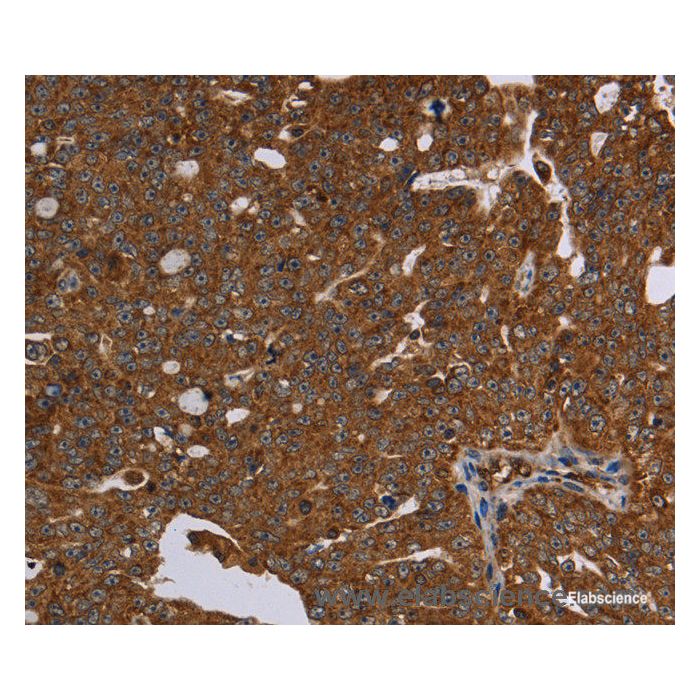
HSD17B13 Polyclonal Antibody
€0.00
In stock
SKU
E-AB-11308
Catalog Number: E-AB-11308
Isotype: Rabbit IgG
Reactivity: human,rat
Applications: IHC,ELISA
Datasheet, Questions? Contact us!
Isotype: Rabbit IgG
Reactivity: human,rat
Applications: IHC,ELISA
Datasheet, Questions? Contact us!
Background:
Hydroxysteroid (17-beta) dehydrogenase 13, also designated Short-chain dehydrogenase/reductase 9 (SCDR9), which regulate the availability of steroids within various tissues throughout the body. HSD17B13 is a 300 amino acid secreted protein that is highly expressed in liver and is also detected in ovary, bone marrow, kidney, brain, lung, skeletal muscle, bladder and testis. The gene encoding HSD17B13 maps to chromosome 4, which houses nearly 6% of the human genome and has the largest gene deserts (regions of the genome with no protein encoding genes) of all of the human chromosomes. Defects in some of the genes located on chromosome 4 are associated with Huntington's disease, Ellis-van Creveld syndrome, methylmalonic acidemia and polycystic kidney disease.
Research Area: Cancer, Cell Biology, Metabolism, Signal Transduction
Synonyms:
17-beta-HSD 13, 17-beta-hydroxysteroid dehydrogenase 13, DHB13, HMFN0376, Hsd17b13, SCDR9, Short-chain dehydrogenase/reductase 9, UNQ497/PRO1014
Immunogen: Recombinant protein of human HSD17B13
Swissprot: Q7Z5P4
Gene Accession: BC112303
Purification Method: Affinity purification
Buffer: PBS with 0.05% sodium azide and 50% glycerol, PH7.4
Concentration: 0.5 mg/mL
Dilution: IHC 1:50-1:200
Storage:
Store at -20°C. Avoid freeze / thaw cycles.
Hydroxysteroid (17-beta) dehydrogenase 13, also designated Short-chain dehydrogenase/reductase 9 (SCDR9), which regulate the availability of steroids within various tissues throughout the body. HSD17B13 is a 300 amino acid secreted protein that is highly expressed in liver and is also detected in ovary, bone marrow, kidney, brain, lung, skeletal muscle, bladder and testis. The gene encoding HSD17B13 maps to chromosome 4, which houses nearly 6% of the human genome and has the largest gene deserts (regions of the genome with no protein encoding genes) of all of the human chromosomes. Defects in some of the genes located on chromosome 4 are associated with Huntington's disease, Ellis-van Creveld syndrome, methylmalonic acidemia and polycystic kidney disease.
Research Area: Cancer, Cell Biology, Metabolism, Signal Transduction
Synonyms:
17-beta-HSD 13, 17-beta-hydroxysteroid dehydrogenase 13, DHB13, HMFN0376, Hsd17b13, SCDR9, Short-chain dehydrogenase/reductase 9, UNQ497/PRO1014
Immunogen: Recombinant protein of human HSD17B13
Swissprot: Q7Z5P4
Gene Accession: BC112303
Purification Method: Affinity purification
Buffer: PBS with 0.05% sodium azide and 50% glycerol, PH7.4
Concentration: 0.5 mg/mL
Dilution: IHC 1:50-1:200
Storage:
Store at -20°C. Avoid freeze / thaw cycles.
| Is Featured? | No |
|---|
Write Your Own Review