
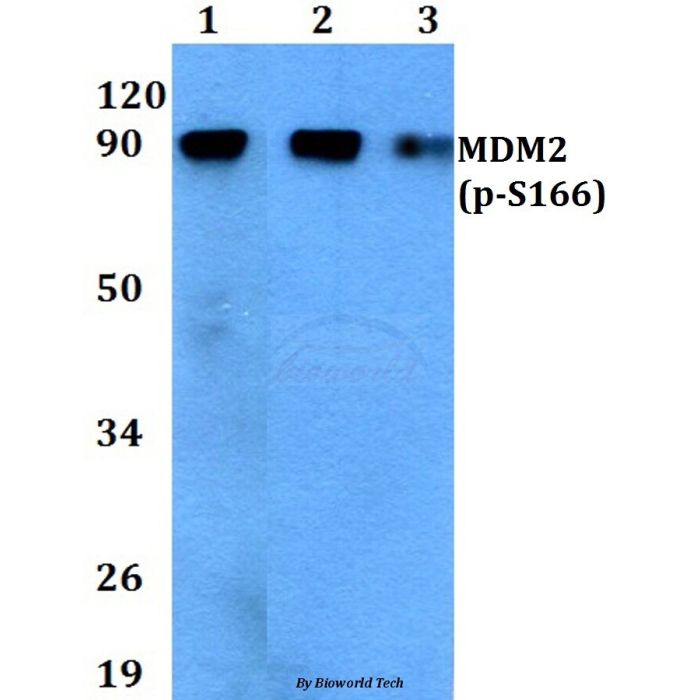
MDM2 (phospho-S166) polyclonal, anti-human, mouse, rat
€328.00
In stock
SKU
BS4273
Background:
p53 is the most commonly mutated gene in human cancer identified to date. Expression of p53 leads to inhibition of cell growth by preventing progression of cells from G1 to S phase of the cell cycle. Most importantly, p53 functions to cause arrest of cells in the G1 phase of the cell cycle following any exposure of cells to DNA-damaging agents. The MDM2 (murine double minute-2) protein was initially identified as an oncogene in a murine transformation system. MDM2 functions to bind p53 and block p53-mediated transactivation of cotransfected reporter constructs. The MDM2 gene is amplified in a high percentage of human sarcomas that retain wildtype p53 and tumor cells that overexpress MDM2 can tolerate high levels of p53 expression. These findings argue that MDM2 overexpression represents at least one mechanism by which p53 function can be abrogated during tumorigenesis.
Alternative Name:
E3 ubiquitin-protein ligase Mdm2, Double minute 2 protein, Hdm2, Oncoprotein Mdm2, p53-binding protein Mdm2, MDM2
Application Dilution: WB: 1:500~1:1000, IHC: 1:50~1:200
Specificity: p-MDM2 (S166) polyclonal antibody detects endogenous levels of MDM2 protein only when phosphorylated at Ser166
Immunogen:
Synthetic phosphopeptide derived from human MDM2 around the phosphorylation site of Serine 166.
MW: ~ 55, 90 kDa
Swis Prot.: Q00987
Purification & Purity:
The antibody was affinity-purified from rabbit antiserum by affinity-chromatography using epitope-specific immunogen and the purity is > 95% (by SDS-PAGE).
Format:
1 mg/ml in Phosphate buffered saline (PBS) with 0.05% sodium azide, approx. pH 7.2.
Storage:
Store at 4°C short term. Aliquot and store at -20°C long term. Avoid freeze-thaw cycles.
For research use only, not for use in diagnostic procedure.
p53 is the most commonly mutated gene in human cancer identified to date. Expression of p53 leads to inhibition of cell growth by preventing progression of cells from G1 to S phase of the cell cycle. Most importantly, p53 functions to cause arrest of cells in the G1 phase of the cell cycle following any exposure of cells to DNA-damaging agents. The MDM2 (murine double minute-2) protein was initially identified as an oncogene in a murine transformation system. MDM2 functions to bind p53 and block p53-mediated transactivation of cotransfected reporter constructs. The MDM2 gene is amplified in a high percentage of human sarcomas that retain wildtype p53 and tumor cells that overexpress MDM2 can tolerate high levels of p53 expression. These findings argue that MDM2 overexpression represents at least one mechanism by which p53 function can be abrogated during tumorigenesis.
Alternative Name:
E3 ubiquitin-protein ligase Mdm2, Double minute 2 protein, Hdm2, Oncoprotein Mdm2, p53-binding protein Mdm2, MDM2
Application Dilution: WB: 1:500~1:1000, IHC: 1:50~1:200
Specificity: p-MDM2 (S166) polyclonal antibody detects endogenous levels of MDM2 protein only when phosphorylated at Ser166
Immunogen:
Synthetic phosphopeptide derived from human MDM2 around the phosphorylation site of Serine 166.
MW: ~ 55, 90 kDa
Swis Prot.: Q00987
Purification & Purity:
The antibody was affinity-purified from rabbit antiserum by affinity-chromatography using epitope-specific immunogen and the purity is > 95% (by SDS-PAGE).
Format:
1 mg/ml in Phosphate buffered saline (PBS) with 0.05% sodium azide, approx. pH 7.2.
Storage:
Store at 4°C short term. Aliquot and store at -20°C long term. Avoid freeze-thaw cycles.
For research use only, not for use in diagnostic procedure.
| Is Featured? | No |
|---|
Write Your Own Review