
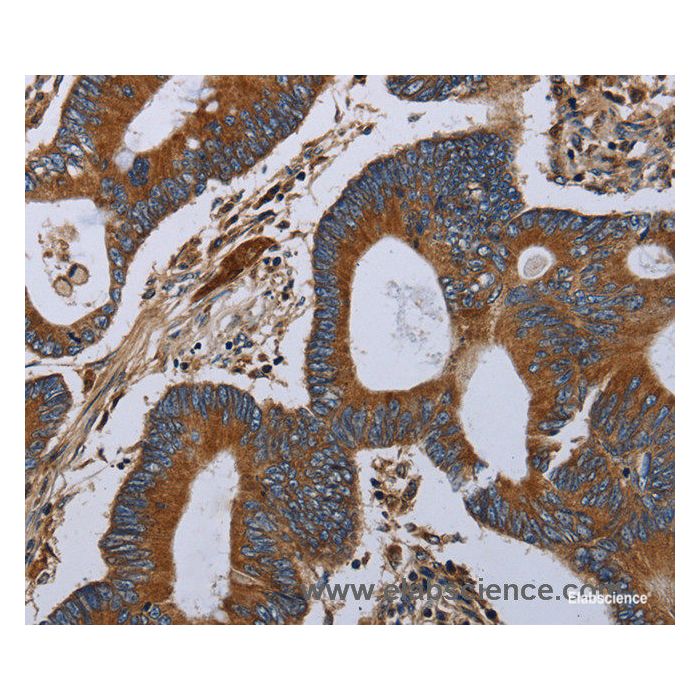
MT-ND6 Polyclonal Antibody
€0.00
In stock
SKU
E-AB-13428
Catalog Number: E-AB-13428
Isotype: Rabbit IgG
Reactivity: human
Applications: IHC,ELISA
Datasheet, Questions? Contact us!
Isotype: Rabbit IgG
Reactivity: human
Applications: IHC,ELISA
Datasheet, Questions? Contact us!
Background:
NADH:ubiquinone oxidoreductase (complex I) is an extremely complicated multiprotein complex located in the inner mitochondrial membrane. Human complex I is important for energy metabolism because its main function is to transport electrons from NADH to ubiquinone, which is accompanied by translocation of protons from the mitochondrial matrix to the intermembrane space. Human complex I appears to consist of 41 subunits. A small number of complex I subunits are the products of mitochondrial genes (subunits 1-7), while the remainder are nuclear encoded and imported from the cytoplasm. The significance of NADH dehydrogenase subunit 6 (ND6) is rapidly becoming increasingly apparent as many mutations leading to amino acid changes in this subunit are associated with known mitochondrial diseases.
Research Area: Cancer, Metabolism, Neuroscience, Signal Transduction
Synonyms:
Mitochondrially encoded NADH dehydrogenase 6, MT ND6, mtND6, NADH dehydrogenase subunit 6 (complex I), NADH ubiquinone oxidoreductase chain 6, NADH Ubiquinone Oxidoreductase subunit ND6, NADH6, ND6
Immunogen: Synthetic peptide of human MT-ND6
Swissprot: P03923
Gene Accession: YP_003024037
Purification Method: Affinity purification
Buffer: PBS with 0.05% sodium azide and 50% glycerol, PH7.4
Concentration: 0.7 mg/mL
Dilution: IHC 1:50-1:200
Storage:
Store at -20°C. Avoid freeze / thaw cycles.
| Is Featured? | No |
|---|
Write Your Own Review