
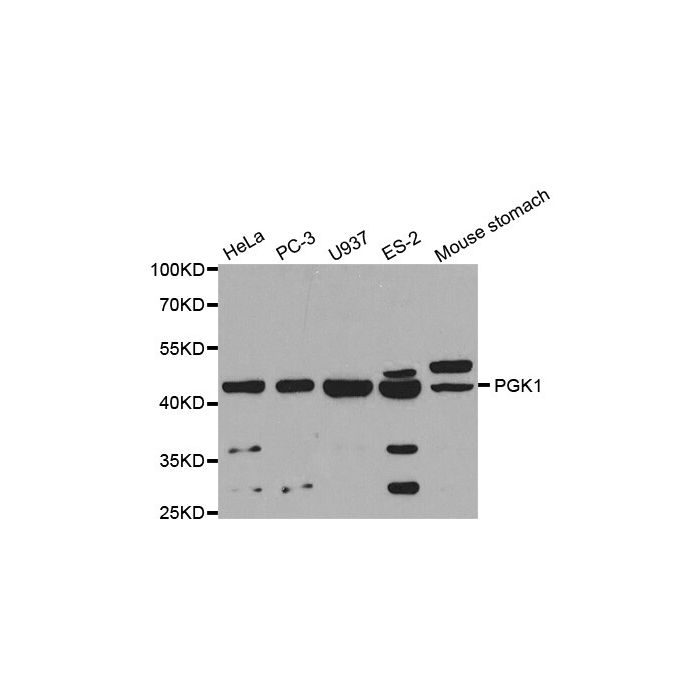
PGK1 polyclonal, anti-human, mouse, rat
€388.00
In stock
SKU
BS6691
Background:
Phosphoglycerate kinases 1/2 (PGK1/2, ATP:3-phospho-D-glycerate 1-phosphotransferase, EC 2.7.2.3) are somatically expressed, glycolytic enzymes that catalyze the transfer of a phosphoryl group from the acyl phosphate of 1,3-bisphosphoglycerate to ADP, thereby forming ATP and 3-phosphoglycerate. The human PGK gene is interrupted by 10 introns and spans 23 kilobases, and is X chromosome-linked at position Xq21.1, a region implicated in prostate cancer, androgen insensitivity, perineal hypospadias, and other genetic abnormalities. In addition to influencing glycolysis, the PGK1 is secreted by tumor cells and contributes to proliferative angiogenic processes as a disulfide reductase. PGK1 mediated reduction of disulphide bonds in the serine proteinase plasmin initiates the release of the tumor blood vessel inhibitor angiostatin, an event that is critical for blood vessel formation or angiogenesis in tumor expansion and metastasis.
Alternative Name:
Cell migration-inducing gene 10 protein, MGC117307, MGC8947, MIG10, pgk1, PGK1, PGKA, Phosphoglycerate kinase 1, Primer recognition protein 2, PRP 2, PRP 2,
Application Dilution: WB: 1:500~1:2000, IHC: 1:50~1:200
Specificity: PGK1 polyclonal antibody detects endogenous levels of PGK1 protein.
Immunogen:
Recombinant full length Human PGK1.
MW: ~ 44 kDa
Swis Prot.: P00558
Purification & Purity:
The antibody was affinity-purified from rabbit antiserum by affinity-chromatography using epitope-specific immunogen and the purity is > 95% (by SDS-PAGE).
Format:
1mg/ml in PBS with 0.1% Sodium Azide, 50% Glycerol.
Storage:
Store at 4°C short term. Aliquot and store at -20°C long term. Avoid freeze-thaw cycles.
For research use only, not for use in diagnostic procedure.
Phosphoglycerate kinases 1/2 (PGK1/2, ATP:3-phospho-D-glycerate 1-phosphotransferase, EC 2.7.2.3) are somatically expressed, glycolytic enzymes that catalyze the transfer of a phosphoryl group from the acyl phosphate of 1,3-bisphosphoglycerate to ADP, thereby forming ATP and 3-phosphoglycerate. The human PGK gene is interrupted by 10 introns and spans 23 kilobases, and is X chromosome-linked at position Xq21.1, a region implicated in prostate cancer, androgen insensitivity, perineal hypospadias, and other genetic abnormalities. In addition to influencing glycolysis, the PGK1 is secreted by tumor cells and contributes to proliferative angiogenic processes as a disulfide reductase. PGK1 mediated reduction of disulphide bonds in the serine proteinase plasmin initiates the release of the tumor blood vessel inhibitor angiostatin, an event that is critical for blood vessel formation or angiogenesis in tumor expansion and metastasis.
Alternative Name:
Cell migration-inducing gene 10 protein, MGC117307, MGC8947, MIG10, pgk1, PGK1, PGKA, Phosphoglycerate kinase 1, Primer recognition protein 2, PRP 2, PRP 2,
Application Dilution: WB: 1:500~1:2000, IHC: 1:50~1:200
Specificity: PGK1 polyclonal antibody detects endogenous levels of PGK1 protein.
Immunogen:
Recombinant full length Human PGK1.
MW: ~ 44 kDa
Swis Prot.: P00558
Purification & Purity:
The antibody was affinity-purified from rabbit antiserum by affinity-chromatography using epitope-specific immunogen and the purity is > 95% (by SDS-PAGE).
Format:
1mg/ml in PBS with 0.1% Sodium Azide, 50% Glycerol.
Storage:
Store at 4°C short term. Aliquot and store at -20°C long term. Avoid freeze-thaw cycles.
For research use only, not for use in diagnostic procedure.
| Is Featured? | No |
|---|
Write Your Own Review