
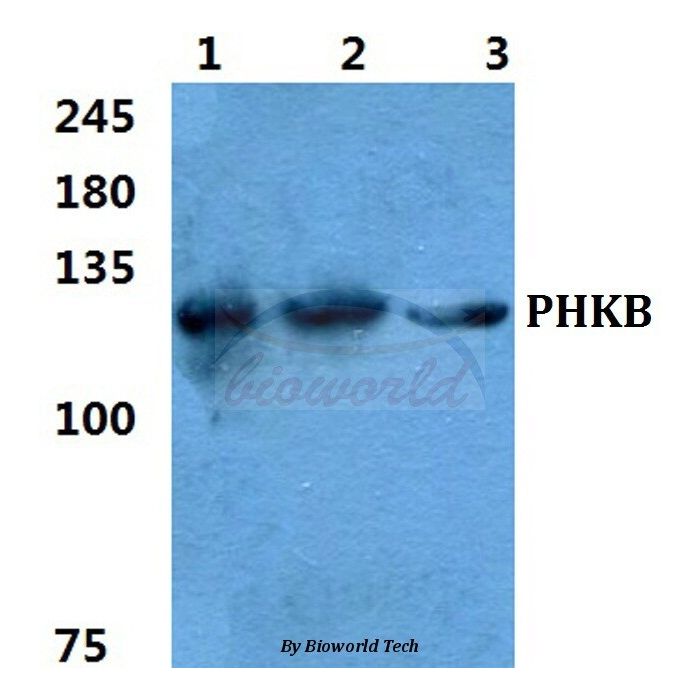
PHKB polyclonal, anti-human, mouse, rat
€305.00
In stock
SKU
BS5854
Background:
Phosphorylase kinase is a hexadecameric enzyme that is comprised of four copies of four subunits that are encoded by four separate genes: PHKA, PHKB, PHKG, and PHKD. This serine/threonine specific kinase converts glycogen phosphorylase b to glycogen phosphorylase a, resulting in the release of glucose-1-phophate from glycogen. PHKB (Phosphorylase b kinase regulatory subunit beta) is a 1093 amino acid subunit of phosphorylase kinase that, along with PHKA, has regulatory functions controlled by phosphorylation. Defects in the gene encoding PHKB are the cause of glycogen storage disease type 9B, which is also known as phosphorylase kinase deficiency of liver and muscle. This disease is characterized by a mild phenotype of hepatomegaly with only slightly elevated transaminase and plasma lipids, no clinical muscle involvement, and generally is correlated with a gradual improvement with increasing age. There are four isoforms of PHKB that are produced as a result of alternative splicing events.
Alternative Name:
Phosphorylase b kinase regulatory subunit beta, Phosphorylase kinase subunit beta, Phosphorylase B
Application Dilution: WB: 1:500~1:1000
Specificity: PHKB polyclonal antibody detects endogenous levels of PHKB protein.
Immunogen:
Synthetic peptide, corresponding to amino acids 699-744 of Human PHKB.
MW: ~ 125 kDa
Swis Prot.: Q93100
Purification & Purity:
The antibody was affinity-purified from rabbit antiserum by affinity-chromatography using epitope-specific immunogen and the purity is > 95% (by SDS-PAGE).
Format:
1mg/ml in PBS with 0.1% Sodium Azide, 50% Glycerol.
Storage:
Store at 4°C short term. Aliquot and store at -20°C long term. Avoid freeze-thaw cycles.
For research use only, not for use in diagnostic procedure.
Phosphorylase kinase is a hexadecameric enzyme that is comprised of four copies of four subunits that are encoded by four separate genes: PHKA, PHKB, PHKG, and PHKD. This serine/threonine specific kinase converts glycogen phosphorylase b to glycogen phosphorylase a, resulting in the release of glucose-1-phophate from glycogen. PHKB (Phosphorylase b kinase regulatory subunit beta) is a 1093 amino acid subunit of phosphorylase kinase that, along with PHKA, has regulatory functions controlled by phosphorylation. Defects in the gene encoding PHKB are the cause of glycogen storage disease type 9B, which is also known as phosphorylase kinase deficiency of liver and muscle. This disease is characterized by a mild phenotype of hepatomegaly with only slightly elevated transaminase and plasma lipids, no clinical muscle involvement, and generally is correlated with a gradual improvement with increasing age. There are four isoforms of PHKB that are produced as a result of alternative splicing events.
Alternative Name:
Phosphorylase b kinase regulatory subunit beta, Phosphorylase kinase subunit beta, Phosphorylase B
Application Dilution: WB: 1:500~1:1000
Specificity: PHKB polyclonal antibody detects endogenous levels of PHKB protein.
Immunogen:
Synthetic peptide, corresponding to amino acids 699-744 of Human PHKB.
MW: ~ 125 kDa
Swis Prot.: Q93100
Purification & Purity:
The antibody was affinity-purified from rabbit antiserum by affinity-chromatography using epitope-specific immunogen and the purity is > 95% (by SDS-PAGE).
Format:
1mg/ml in PBS with 0.1% Sodium Azide, 50% Glycerol.
Storage:
Store at 4°C short term. Aliquot and store at -20°C long term. Avoid freeze-thaw cycles.
For research use only, not for use in diagnostic procedure.
| Is Featured? | No |
|---|
Write Your Own Review