
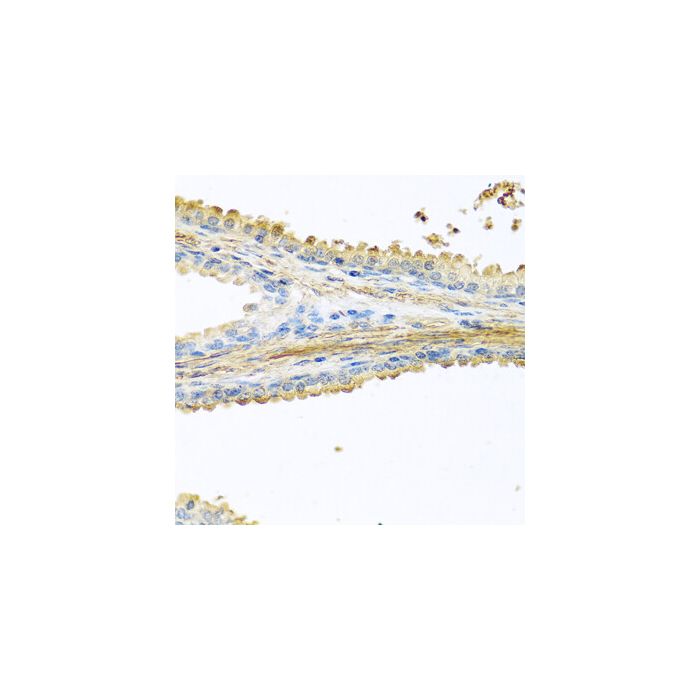
PIP polyclonal, anti-human, mouse, rat
€388.00
In stock
SKU
BS8182
Background:
Gross cystic disease fluid protein 15 (GCDFP-15) is a major protein component of benign breast gross cysts. It is a known marker of breast cancer, as it is found in approximately 50% of all breast cancer specimens. GCDFP-15, also known as PIP, for prolactin inducible protein, is a prolactin and androgen controlled protein. It is detectable in saliva, tears, sweat, seminal plasma, submucosal glands of the lung and amniotic fluid. PIP, the gene encoding GCDFP-15 is expressed in exocrine glands and, in pathologic conditions, in breast cysts and breast cancers exhibiting apocrine features. The PIP gene maps to the long arm of chromosome 7, a region frequently altered in mammary tumors.
Alternative Name:
Prolactin-inducible protein, Gross cystic disease fluid protein 15, GCDFP-15, Prolactin-induced protein, Secretory actin-binding protein, SA BP, gp17, PIP, GCDFP15, GPIP4
Application Dilution: IHC: 1:50 - 1:100, IF: 1:50 - 1:100
Specificity: PIP polyclonal antibody detects endogenous levels of PIP protein.
Immunogen:
Recombinant full length Human PIP.
MW: ~ 17 kDa
Swis Prot.: P12273
Purification & Purity:
The antibody was affinity-purified from rabbit antiserum by affinity-chromatography using epitope-specific immunogen and the purity is > 95% (by SDS-PAGE).
Format:
1mg/ml in PBS with 0.1% Sodium Azide, 50% Glycerol.
Storage:
Store at 4°C short term. Aliquot and store at -20°C long term. Avoid freeze-thaw cycles.
For research use only, not for use in diagnostic procedure.
Gross cystic disease fluid protein 15 (GCDFP-15) is a major protein component of benign breast gross cysts. It is a known marker of breast cancer, as it is found in approximately 50% of all breast cancer specimens. GCDFP-15, also known as PIP, for prolactin inducible protein, is a prolactin and androgen controlled protein. It is detectable in saliva, tears, sweat, seminal plasma, submucosal glands of the lung and amniotic fluid. PIP, the gene encoding GCDFP-15 is expressed in exocrine glands and, in pathologic conditions, in breast cysts and breast cancers exhibiting apocrine features. The PIP gene maps to the long arm of chromosome 7, a region frequently altered in mammary tumors.
Alternative Name:
Prolactin-inducible protein, Gross cystic disease fluid protein 15, GCDFP-15, Prolactin-induced protein, Secretory actin-binding protein, SA BP, gp17, PIP, GCDFP15, GPIP4
Application Dilution: IHC: 1:50 - 1:100, IF: 1:50 - 1:100
Specificity: PIP polyclonal antibody detects endogenous levels of PIP protein.
Immunogen:
Recombinant full length Human PIP.
MW: ~ 17 kDa
Swis Prot.: P12273
Purification & Purity:
The antibody was affinity-purified from rabbit antiserum by affinity-chromatography using epitope-specific immunogen and the purity is > 95% (by SDS-PAGE).
Format:
1mg/ml in PBS with 0.1% Sodium Azide, 50% Glycerol.
Storage:
Store at 4°C short term. Aliquot and store at -20°C long term. Avoid freeze-thaw cycles.
For research use only, not for use in diagnostic procedure.
| Is Featured? | No |
|---|
Write Your Own Review