
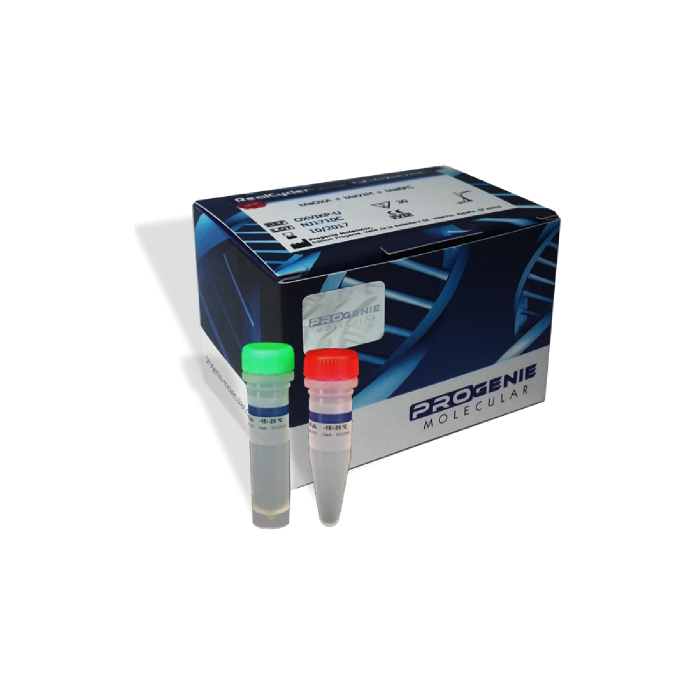
Human EGFR Elisa Kit
€0.00
In stock
SKU
SEKH-0154
Catalog Number: SEKH-0154
Detection Range: 31.2-2,000 pg/ml
Sensitivity: 15 pg/ml
Request Manual
Questions? Contact us!
Detection Range: 31.2-2,000 pg/ml
Sensitivity: 15 pg/ml
Request Manual
Questions? Contact us!
Background:
The EGF R subfamily of receptor tyrosine kinases comprises four members: EGF R (also known as HER-1, ErbB1, or ErbB), ErbB2 (Neu, HER-2), ErbB3 (HER-3), and ErbB4 (HER-4). All family members are type I transmembrane glycoproteins with an extracellular ligand binding domain containing two cysteine-rich domains separated by a spacer region and a cytoplasmic domain containing a membrane-proximal tyrosine kinase domain followed by multiple tyrosine autophosphorylation sites. The human EGF R cDNA encodes a 1210 amino acid (aa) precursor with a 24 aa signal peptide, a 621 aa extracellular domain (ECD), a 23 aa transmembrane segment, and a 542 aa cytoplasmic domain. Soluble receptors consisting of the extracellular ligand binding domain are generated by alternate splicing in human and mouse. Within the ECD, human EGF R shares 88% aa sequence identity with mouse and rat EGF R. It shares 43% - 44% aa sequence identity with the ECD of human ErbB2, ErbB3, and ErbB4. EGF R binds a subset of the EGF family ligands, including EGF, amphiregulin, TGF-alpha, betacellulin, epiregulin, HB-EGF, and epigen. Ligand binding induces EGF R homodimerization as well as heterodimerization with ErbB2, resulting in kinase activation, heterodimerization tyrosine phosphorylation and cell signaling. EGF R can also be recruited to form heterodimers with the ligand-activated ErbB3 or ErbB4. EGF R signaling regulates multiple biological functions including cell proliferation, differentiation, motility, and apoptosis. EGF R is overexpressed in a wide variety of tumors and is the target of several anti-cancer drugs.
Long Name: Epidermal Growth Factor Receptor
Synonyms:
EGFR, ERBB, ERBB1, HER1, NISBD2, PIG61, mENA, epidermal growth factor receptor
Sample Type:
Serum, Plasma, Cell culture supernatant.
Assay Lenght: 3.5h
The EGF R subfamily of receptor tyrosine kinases comprises four members: EGF R (also known as HER-1, ErbB1, or ErbB), ErbB2 (Neu, HER-2), ErbB3 (HER-3), and ErbB4 (HER-4). All family members are type I transmembrane glycoproteins with an extracellular ligand binding domain containing two cysteine-rich domains separated by a spacer region and a cytoplasmic domain containing a membrane-proximal tyrosine kinase domain followed by multiple tyrosine autophosphorylation sites. The human EGF R cDNA encodes a 1210 amino acid (aa) precursor with a 24 aa signal peptide, a 621 aa extracellular domain (ECD), a 23 aa transmembrane segment, and a 542 aa cytoplasmic domain. Soluble receptors consisting of the extracellular ligand binding domain are generated by alternate splicing in human and mouse. Within the ECD, human EGF R shares 88% aa sequence identity with mouse and rat EGF R. It shares 43% - 44% aa sequence identity with the ECD of human ErbB2, ErbB3, and ErbB4. EGF R binds a subset of the EGF family ligands, including EGF, amphiregulin, TGF-alpha, betacellulin, epiregulin, HB-EGF, and epigen. Ligand binding induces EGF R homodimerization as well as heterodimerization with ErbB2, resulting in kinase activation, heterodimerization tyrosine phosphorylation and cell signaling. EGF R can also be recruited to form heterodimers with the ligand-activated ErbB3 or ErbB4. EGF R signaling regulates multiple biological functions including cell proliferation, differentiation, motility, and apoptosis. EGF R is overexpressed in a wide variety of tumors and is the target of several anti-cancer drugs.
Long Name: Epidermal Growth Factor Receptor
Synonyms:
EGFR, ERBB, ERBB1, HER1, NISBD2, PIG61, mENA, epidermal growth factor receptor
Sample Type:
Serum, Plasma, Cell culture supernatant.
Assay Lenght: 3.5h
| Is Featured? | No |
|---|
Write Your Own Review