
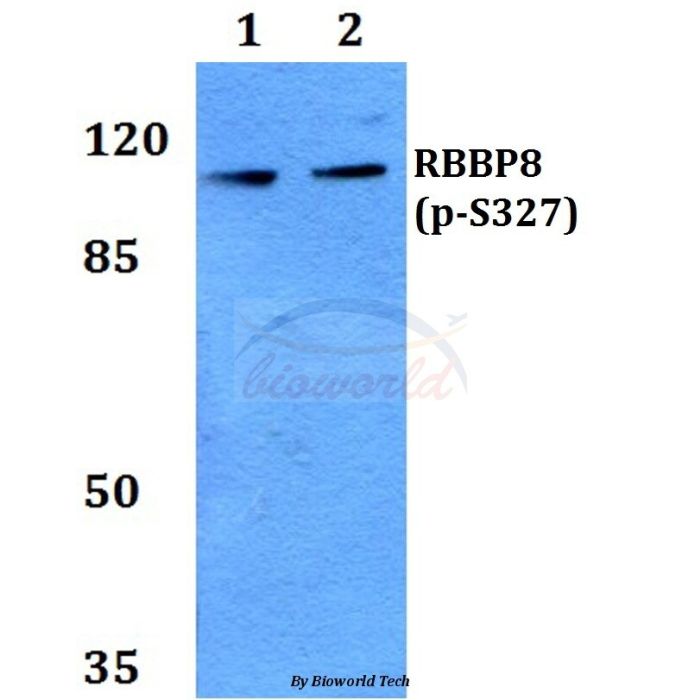
CtIP (phospho-S327) polyclonal, anti-human, mouse
€328.00
In stock
SKU
BS64001
Background:
CtBP1 is a cellular phosphoprotein that associates with various proteins and functions as a co-repressor of transcription. CtBP1 and the related protein CtBP2 are characterized as C-terminal binding protein of adenovirus E1A, and they preferentially associate with the E1A via a five amino acid motif, PLDLS, to repress E1A-induced oncogenesis and cellular transformation. CtBP1 is expressed from embryo to adult, but CtBP2 is mainly expressed during embryogenesis. During skeletal and T cell development, CtBP1 and CtBP2 associate with the PLDLSL domain of dEF1, a cellular zinc finger-homeodomain protein, and thereby enhance dEF1-induced transcriptional silencing. In addition, CtBP complexes with CtIP, a protein that recognizes distinctly different protein motifs from CtBP. CtIP binds to the BRCT repeats within the breast cancer gene BRCA1 and enables CtBP to influence BRCA1 activity. CtIP/CtBP binding to BRCA1 inhibits the transactivation of the p21 promoter, and it is critical for regulating p21 transcription in response to DNA damage.
Alternative Name:
DNA endonuclease RBBP8, CtBP-interacting protein, CtIP, Retinoblastoma-binding protein 8, RBBP-8, Retinoblastoma-interacting protein and myosin-like, RIM, Sporulation in the absence of SPO11 protein 2 homolog, SAE2, RBBP8, CTIP
Application Dilution: WB: 1:500~1:1000
Specificity: p-CtIP (S327) polyclonal antibody detects endogenous levels of CtIP protein only when phosphorylated at Ser327.
Immunogen:
Synthetic phosphopeptide derived from human CtIP around the phosphorylation site of Serine 327.
MW: ~ 110 kDa
Swis Prot.: Q99708
Purification & Purity:
The antibody was affinity-purified from rabbit antiserum by affinity-chromatography using epitope-specific immunogen and the purity is > 95% (by SDS-PAGE).
Format:
1 mg/ml in Phosphate buffered saline (PBS) with 0.05% sodium azide, approx. pH 7.2.
Storage:
Store at 4°C short term. Aliquot and store at -20°C long term. Avoid freeze-thaw cycles.
For research use only, not for use in diagnostic procedure.
CtBP1 is a cellular phosphoprotein that associates with various proteins and functions as a co-repressor of transcription. CtBP1 and the related protein CtBP2 are characterized as C-terminal binding protein of adenovirus E1A, and they preferentially associate with the E1A via a five amino acid motif, PLDLS, to repress E1A-induced oncogenesis and cellular transformation. CtBP1 is expressed from embryo to adult, but CtBP2 is mainly expressed during embryogenesis. During skeletal and T cell development, CtBP1 and CtBP2 associate with the PLDLSL domain of dEF1, a cellular zinc finger-homeodomain protein, and thereby enhance dEF1-induced transcriptional silencing. In addition, CtBP complexes with CtIP, a protein that recognizes distinctly different protein motifs from CtBP. CtIP binds to the BRCT repeats within the breast cancer gene BRCA1 and enables CtBP to influence BRCA1 activity. CtIP/CtBP binding to BRCA1 inhibits the transactivation of the p21 promoter, and it is critical for regulating p21 transcription in response to DNA damage.
Alternative Name:
DNA endonuclease RBBP8, CtBP-interacting protein, CtIP, Retinoblastoma-binding protein 8, RBBP-8, Retinoblastoma-interacting protein and myosin-like, RIM, Sporulation in the absence of SPO11 protein 2 homolog, SAE2, RBBP8, CTIP
Application Dilution: WB: 1:500~1:1000
Specificity: p-CtIP (S327) polyclonal antibody detects endogenous levels of CtIP protein only when phosphorylated at Ser327.
Immunogen:
Synthetic phosphopeptide derived from human CtIP around the phosphorylation site of Serine 327.
MW: ~ 110 kDa
Swis Prot.: Q99708
Purification & Purity:
The antibody was affinity-purified from rabbit antiserum by affinity-chromatography using epitope-specific immunogen and the purity is > 95% (by SDS-PAGE).
Format:
1 mg/ml in Phosphate buffered saline (PBS) with 0.05% sodium azide, approx. pH 7.2.
Storage:
Store at 4°C short term. Aliquot and store at -20°C long term. Avoid freeze-thaw cycles.
For research use only, not for use in diagnostic procedure.
| Is Featured? | No |
|---|
Write Your Own Review