
SEPX1 polyclonal, anti-human, mouse, rat
€388.00
In stock
SKU
BS8397
Background:
Selenium is an essential trace element that is incorporated as selenocysteine into the primary structure of selenoproteins. Nutritional deficiency of selenium decreases selenoprotein concentrations and leads to pathologic conditions. Most of the known selenoproteins are members of the glutathione peroxidase or iodothyronine deiodinase families. Selenoprotein P (SEPP1) is a major selenoprotein that is not a member of those families. It is an extracellular glycoprotein that is present in several isoforms and is the only selenoprotein known to contain multiple selenocysteine residues. SECIS elements form stem-loop structures in the 3' untranslated regions (UTR) of eukaryotic mRNAs that encode selenoproteins. The Selenoprotein W SECIS elements contain an additional highly conserved base-paired stem that may prevent inappropriate selenocysteine incorporation at the UGA stop codons. Selenoprotein R, also designated methionine-R-sulfoxide reductase or Selenoprotein X1, is a zinc binding protein. The gene encoding for Selenoprotein R contains seleno-cysteine, which is encoded by the usual stop codon TGA at the active site. Selenoprotein R may play a role in protection against oxidative stress.
Alternative Name:
Methionine-R-sulfoxide reductase B1, MsrB1, Selenoprotein X, SelX, MSRB1, SEPX1, HSPC270
Application Dilution: WB: 1:500~1:2000, IF: 1:50~1:200
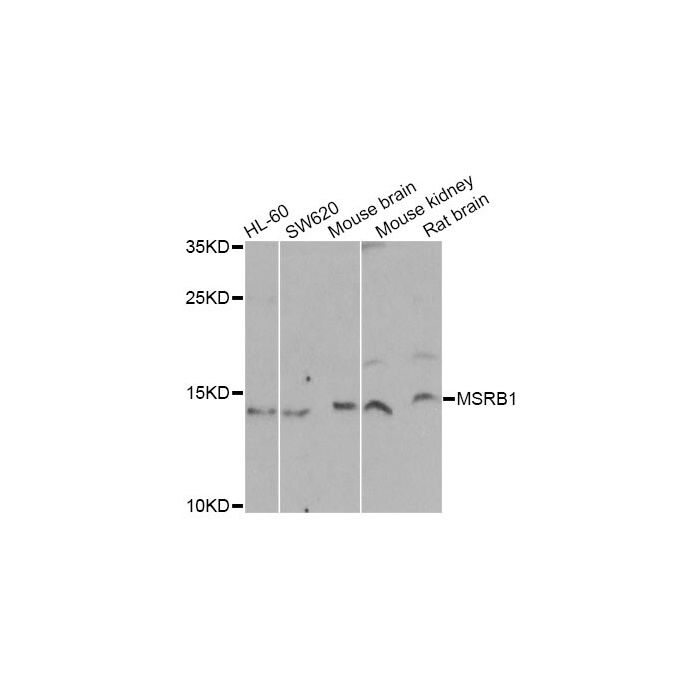
Specificity: SEPX1 polyclonal antibody detects endogenous levels of SEPX1 protein.
Immunogen:
Recombinant full length Human SEPX1.
MW: ~ 13 kDa
Swis Prot.: Q9NZV6
Purification & Purity:
The antibody was affinity-purified from rabbit antiserum by affinity-chromatography using epitope-specific immunogen and the purity is > 95% (by SDS-PAGE).
Format:
1mg/ml in PBS with 0.1% Sodium Azide, 50% Glycerol.
Storage:
Store at 4°C short term. Aliquot and store at -20°C long term. Avoid freeze-thaw cycles.
For research use only, not for use in diagnostic procedure.
Selenium is an essential trace element that is incorporated as selenocysteine into the primary structure of selenoproteins. Nutritional deficiency of selenium decreases selenoprotein concentrations and leads to pathologic conditions. Most of the known selenoproteins are members of the glutathione peroxidase or iodothyronine deiodinase families. Selenoprotein P (SEPP1) is a major selenoprotein that is not a member of those families. It is an extracellular glycoprotein that is present in several isoforms and is the only selenoprotein known to contain multiple selenocysteine residues. SECIS elements form stem-loop structures in the 3' untranslated regions (UTR) of eukaryotic mRNAs that encode selenoproteins. The Selenoprotein W SECIS elements contain an additional highly conserved base-paired stem that may prevent inappropriate selenocysteine incorporation at the UGA stop codons. Selenoprotein R, also designated methionine-R-sulfoxide reductase or Selenoprotein X1, is a zinc binding protein. The gene encoding for Selenoprotein R contains seleno-cysteine, which is encoded by the usual stop codon TGA at the active site. Selenoprotein R may play a role in protection against oxidative stress.
Alternative Name:
Methionine-R-sulfoxide reductase B1, MsrB1, Selenoprotein X, SelX, MSRB1, SEPX1, HSPC270
Application Dilution: WB: 1:500~1:2000, IF: 1:50~1:200
Specificity: SEPX1 polyclonal antibody detects endogenous levels of SEPX1 protein.
Immunogen:
Recombinant full length Human SEPX1.
MW: ~ 13 kDa
Swis Prot.: Q9NZV6
Purification & Purity:
The antibody was affinity-purified from rabbit antiserum by affinity-chromatography using epitope-specific immunogen and the purity is > 95% (by SDS-PAGE).
Format:
1mg/ml in PBS with 0.1% Sodium Azide, 50% Glycerol.
Storage:
Store at 4°C short term. Aliquot and store at -20°C long term. Avoid freeze-thaw cycles.
For research use only, not for use in diagnostic procedure.
| Is Featured? | No |
|---|
Write Your Own Review