
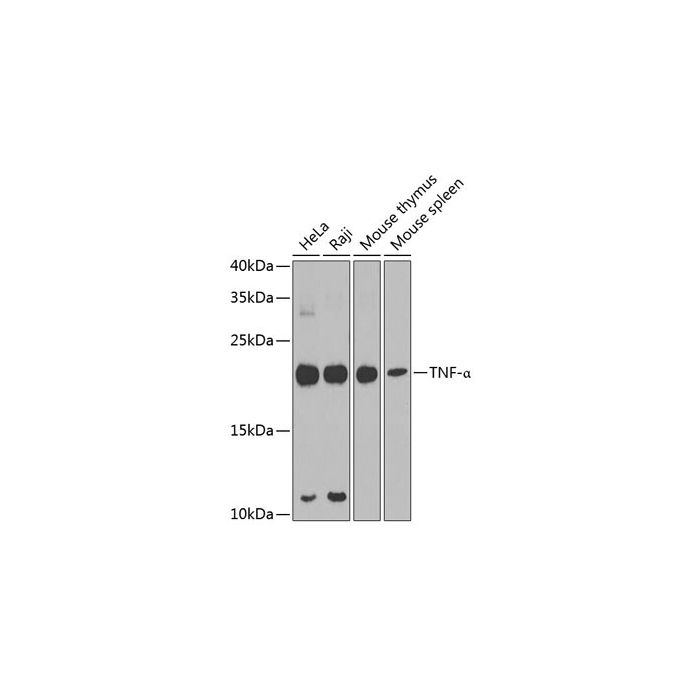
TNF-α polyclonal, anti-human, mouse, rat
€388.00
In stock
SKU
BS6000
Background:
Tumor Necrosis Factor Alpha (TNF alpha) is a protein secreted by lipopolysaccharide stimulated macrophages, and causes tumor necrosis when injected into tumour bearing mice. TNF alpha is believed to mediate pathogenic shock and tissue injury associated with endotoxemia. TNF alpha exists as a multimer of two, three, or five noncovalently linked units, but shows a single 17 a band following SDS PAGE under non reducing conditions. TNF alpha is closely related to the 25 a protein Tumour Necrosis Factor beta (lymphotoxin), sharing the same receptors and cellular actions. TNF alpha causes cytolysis or cytostasis of certain transformed cells, being synergistic with interferon gamma in its cytotoxicity. Although it has little effect on many cultured normal human cells, TNF alpha appears to be directly toxic to vascular endothelial cells.
Alternative Name:
Tumor necrosis factor, Cachectin, TNF-alpha, Tumor necrosis factor ligand superfamily member 2, TNF-a, Tumor necrosis factor, soluble form, TNF, TNFA, TNFSF2, TNFα, TNF α
Application Dilution: WB: 1:500~1:2000, IHC: 1:50~1:200, IF: 1:200
Specificity: TNF-α polyclonal antibody detects endogenous levels of TNF-α protein.
Immunogen:
Recombinant full length Human TNF-α.
MW: ~ 17,25 kDa
Swis Prot.: P01375
Purification & Purity:
The antibody was affinity-purified from rabbit antiserum by affinity-chromatography using epitope-specific immunogen and the purity is > 95% (by SDS-PAGE).
Format:
1mg/ml in PBS with 0.1% Sodium Azide, 50% Glycerol.
Storage:
Store at 4°C short term. Aliquot and store at -20°C long term. Avoid freeze-thaw cycles.
For research use only, not for use in diagnostic procedure.
Tumor Necrosis Factor Alpha (TNF alpha) is a protein secreted by lipopolysaccharide stimulated macrophages, and causes tumor necrosis when injected into tumour bearing mice. TNF alpha is believed to mediate pathogenic shock and tissue injury associated with endotoxemia. TNF alpha exists as a multimer of two, three, or five noncovalently linked units, but shows a single 17 a band following SDS PAGE under non reducing conditions. TNF alpha is closely related to the 25 a protein Tumour Necrosis Factor beta (lymphotoxin), sharing the same receptors and cellular actions. TNF alpha causes cytolysis or cytostasis of certain transformed cells, being synergistic with interferon gamma in its cytotoxicity. Although it has little effect on many cultured normal human cells, TNF alpha appears to be directly toxic to vascular endothelial cells.
Alternative Name:
Tumor necrosis factor, Cachectin, TNF-alpha, Tumor necrosis factor ligand superfamily member 2, TNF-a, Tumor necrosis factor, soluble form, TNF, TNFA, TNFSF2, TNFα, TNF α
Application Dilution: WB: 1:500~1:2000, IHC: 1:50~1:200, IF: 1:200
Specificity: TNF-α polyclonal antibody detects endogenous levels of TNF-α protein.
Immunogen:
Recombinant full length Human TNF-α.
MW: ~ 17,25 kDa
Swis Prot.: P01375
Purification & Purity:
The antibody was affinity-purified from rabbit antiserum by affinity-chromatography using epitope-specific immunogen and the purity is > 95% (by SDS-PAGE).
Format:
1mg/ml in PBS with 0.1% Sodium Azide, 50% Glycerol.
Storage:
Store at 4°C short term. Aliquot and store at -20°C long term. Avoid freeze-thaw cycles.
For research use only, not for use in diagnostic procedure.
| Is Featured? | No |
|---|
Write Your Own Review