
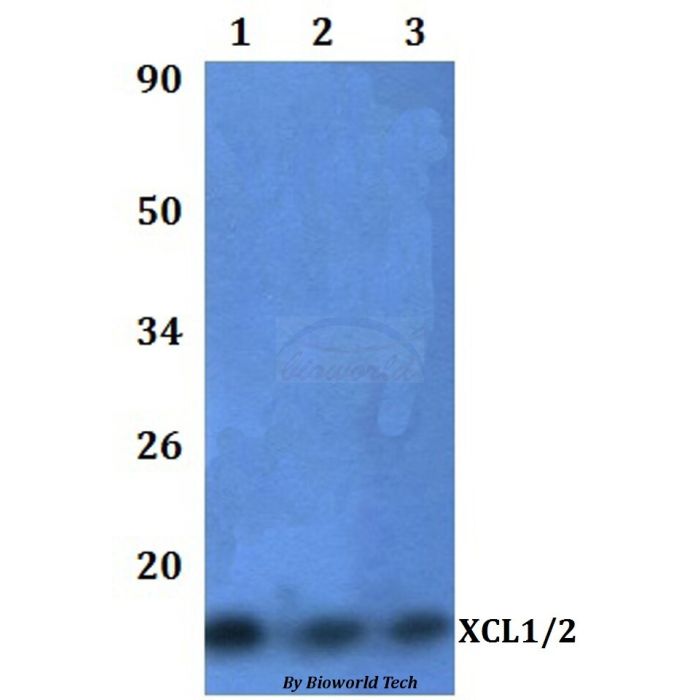
XCL1/2 polyclonal, anti-human, mouse, rat
€305.00
In stock
SKU
BS60985
Background:
Lymphotactin is a chemokine-like molecule produced selectively, if not exclusively, by activated CD8+ T cells. Lymphotactin is a C-type member of the chemokine superfamily, but retains only the 2nd and 4th of the four cysteine residues conserved in other chemokines. In normal tissues, lymphotactin is expressed at high levels in spleen, thymus, small intestine, and peripheral blood leukocytes, as well as at low levels in lung, prostate, and ovary. Lymphotactin is chemotactic for CD4+ and CD8+ T cells but not for monocytes, and induces a rise in intracellular calcium in peripheral blood lymphocytes. The specific receptor for lymphotactin is XCR1, a member of the G protein-coupled receptor family. The gene which encodes lymphotactin maps to human chromosome 1q23.
Alternative Name:
Lymphotactin, ATAC, C motif chemokine 1, Cytokine SCM-1, Lymphotaxin, SCM-1-alpha, Small-inducible cytokine C1, XC chemokine ligand 1, XCL1, LTN, SCYC1, Cytokine SCM-1 beta, C motif chemokine 2, XC chemokine ligand 2, XCL2, SCYC2
Application Dilution: WB: 1:500~1:1000
Specificity: XCL1/2 polyclonal antibody detects endogenous levels of XCL1/2 protein.
Immunogen:
A synthetic peptide corresponding to residues in Human XCL1.
MW: ~ 13 kDa
Swis Prot.: P47992/Q9UBD3
Purification & Purity:
The antibody was affinity-purified from rabbit antiserum by affinity-chromatography using epitope-specific immunogen and the purity is > 95% (by SDS-PAGE).
Format:
1 mg/ml in Phosphate buffered saline (PBS) with 0.05% sodium azide, approx. pH 7.3.
Storage:
Store at 4°C short term. Aliquot and store at -20°C long term. Avoid freeze-thaw cycles.
For research use only, not for use in diagnostic procedure.
Lymphotactin is a chemokine-like molecule produced selectively, if not exclusively, by activated CD8+ T cells. Lymphotactin is a C-type member of the chemokine superfamily, but retains only the 2nd and 4th of the four cysteine residues conserved in other chemokines. In normal tissues, lymphotactin is expressed at high levels in spleen, thymus, small intestine, and peripheral blood leukocytes, as well as at low levels in lung, prostate, and ovary. Lymphotactin is chemotactic for CD4+ and CD8+ T cells but not for monocytes, and induces a rise in intracellular calcium in peripheral blood lymphocytes. The specific receptor for lymphotactin is XCR1, a member of the G protein-coupled receptor family. The gene which encodes lymphotactin maps to human chromosome 1q23.
Alternative Name:
Lymphotactin, ATAC, C motif chemokine 1, Cytokine SCM-1, Lymphotaxin, SCM-1-alpha, Small-inducible cytokine C1, XC chemokine ligand 1, XCL1, LTN, SCYC1, Cytokine SCM-1 beta, C motif chemokine 2, XC chemokine ligand 2, XCL2, SCYC2
Application Dilution: WB: 1:500~1:1000
Specificity: XCL1/2 polyclonal antibody detects endogenous levels of XCL1/2 protein.
Immunogen:
A synthetic peptide corresponding to residues in Human XCL1.
MW: ~ 13 kDa
Swis Prot.: P47992/Q9UBD3
Purification & Purity:
The antibody was affinity-purified from rabbit antiserum by affinity-chromatography using epitope-specific immunogen and the purity is > 95% (by SDS-PAGE).
Format:
1 mg/ml in Phosphate buffered saline (PBS) with 0.05% sodium azide, approx. pH 7.3.
Storage:
Store at 4°C short term. Aliquot and store at -20°C long term. Avoid freeze-thaw cycles.
For research use only, not for use in diagnostic procedure.
| Is Featured? | No |
|---|
Write Your Own Review